
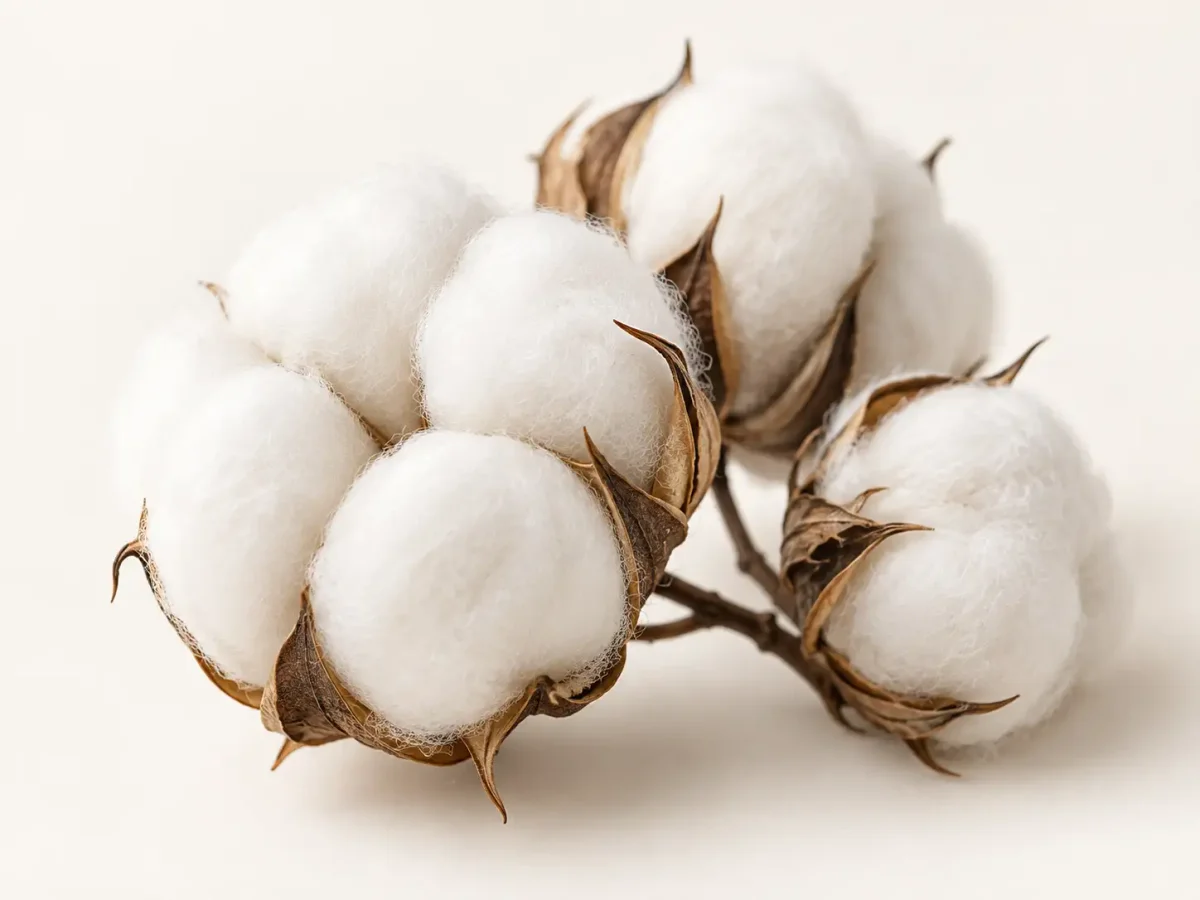
Cotton is a plant-derived textile fiber that develops on the seeds of cultivated plants in the genus Gossypium. In textile use, the word “cotton” may refer to the crop, the harvested material, the separated fiber, or a product made from that fiber. Those meanings are related, but they are not interchangeable.
Cotton as a plant and a textile material
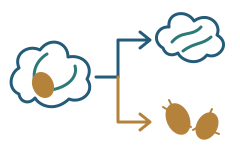
An individual cotton fiber begins as a single cell extending from the surface of a cotton seed. The fibers develop within the boll and become accessible when the mature boll opens. Harvesting collects the fiber together with the seeds; ginning later separates the spinnable lint from the cottonseed.
Keeping the material states separate makes the rest of the cotton supply chain easier to understand:
| Term or material state | Meaning in this module | Important boundary |
|---|---|---|
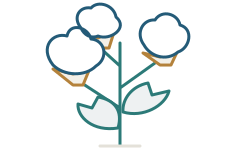
| Cotton plant | A cultivated Gossypium plant on which cotton fibers develop. | The plant is the biological source, not the separated textile fiber. |
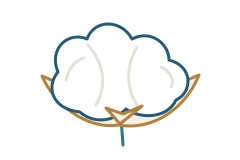
| Boll | The plant structure containing the seeds and developing fibers; it opens as the fiber matures. | An open boll still contains fiber attached to seed. |
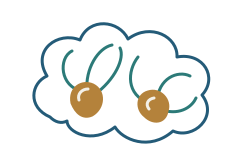
| Seed cotton | Harvested cotton fiber that still contains cottonseed. | Seed cotton has not yet been separated into lint and seed. |
| Lint cotton or cotton lint | Cotton fibers removed from seed during ginning. | Lint is distinct from seed cotton and from the shorter fibers left on seed. |
| Cotton linters | Short residual fibers associated with the seed after the principal lint has been removed. | Linters are not another name for lint cotton. |
| Cotton yarn | A downstream material made by assembling cotton fibers through yarn production. | Yarn properties depend on more than fiber identity alone. |
| Cotton fabric or product | A downstream material or item made from cotton yarn. | Fabric and product performance also depend on construction, finishing, and processing history. |
The expression “cotton fiber” is useful when the discussion concerns the separated fibrous material itself. More specific terms—especially seed cotton, lint cotton, and cotton linters—should be used when the stage of processing matters.
Cotton types and names
Cotton belongs to the genus Gossypium. Four domesticated species are cultivated for textile fiber: Gossypium hirsutum, Gossypium barbadense, Gossypium arboreum, and Gossypium herbaceum.
Common names such as Upland and Pima can help identify particular cultivated cotton contexts, but they should not be treated as universal quality grades or complete performance descriptions. A species or commercial name does not, by itself, establish the condition of a fiber lot or the performance of the yarn, fabric, or finished product made from it.
Where cotton fiber is used
After ginning, lint can be prepared for yarn production. Cotton yarn may then be woven or knitted into textiles used for apparel, household textiles, towels, and upholstery. These are representative uses rather than a complete product catalog. Cottonseed and linters follow different by-product pathways and should not be confused with textile lint.
Cotton’s cellular structure, length, strength, and interaction with water and dyes help explain why it can function as a textile fiber. They do not determine every outcome in a cotton product. Spinning choices, yarn construction, fabric structure, dyeing, finishing, and processing history can all change what a user experiences in the finished material.
What “cotton” does—and does not—tell you
Calling a material cotton identifies its fiber origin at a broad level. It does not tell you, on its own:
- which fiber attributes were measured;
- how consistent the fibers are within the material;
- how the yarn was made;
- how the fabric was constructed or finished; or
- how the finished product will perform in a particular use.
For the high-level sequence from the plant to baled lint, continue to From Cotton Plant to Textile Fiber. For the structure, variation, and terminology used to describe fiber quality, see Cotton Fiber Properties and Quality.